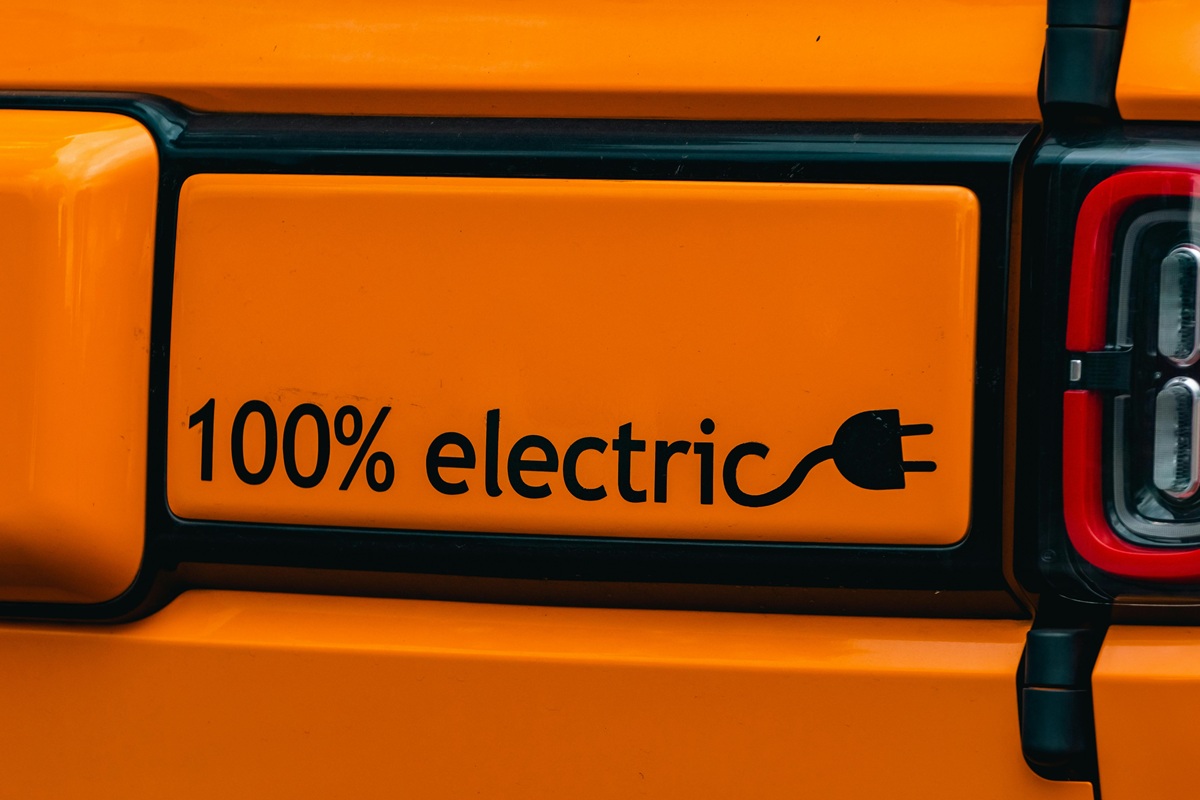
The state of Washington has started a $112 million fund to help businesses dependent on diesel-powered vehicles to purchase low-emission electric commercial vehicles.
Much of the attention on electric vehicles has focused on passenger cars for the consumer. But now commercial vehicles that run on diesel are getting a closer look. Washington State has led state efforts to reduce carbon emissions, and a new program aims to reduce them further by encouraging purchase of electric trucks.
Fund offers vouchers for electric vehicles
The state’s Department of Transportation has announced a $112 million fund to finance vouchers that could pay as much as 40 percent of the cost of a new electric commercial vehicle. Called the Washington Zero-Emission Incentive Program, or WAZIP, the program covers more than 100 low-emission medium- and heavy-duty trucks as well as types of construction and farm equipment. Marine equipment is covered as well.
During a launch event in April, Washington Governor Bob Ferguson touted the program’s economic benefits. “It helps businesses modernize their fleets, dealerships increase their sales, and residents live healthier lives through reduced emissions,” he said.
Four states offer money for major manufacturers
Washington is among four states offering the vouchers. California, New York, and New Jersey offer similar programs. Major manufacturers are supported, such as Volvo, Freightliner, Hyster-Yale, and Silverback Marine.
Like passenger cars and vans, battery-powered and hybrid commercial vehicles are improving rapidly, with longer range and sodium-ion battery options less prone to fires.
Vouchers offered first-come, first-served
Vouchers are available on a first-come, first-served basis. Small businesses with less than $10 million in annual gross receipts may be eligible for larger incentives.
WAZIP is funded by Washington State’s Climate Commitment Act, passed in 2021. The law set up a market-based cap-and-invest program designed to reduce greenhouse gas emissions in the state.
Have you switched from diesel to electric? Tell us about it in the comments.
Gas prices breaking your bank account? A used electric vehicle might be a good choice, but they can be hard to find. Here’s some tips and tricks to help, including a “green” financing option.
Volatile gasoline prices are taking big chunks out of consumer budgets. Many people are wondering if it’s time to buy an electric vehicle, but the prices of new vehicles are sometimes out of reach. A used EV might be a good option, especially as the market expands. According to the website Green Cars, as many as 300,000 used EVs may hit the market in 2026 as lease-holders return cars purchased before the end of a federal tax credit in September, 2025.
Finding and buying are different
Buying a used EV is significantly different than buying a conventional pre-owned vehicle. (See my last blog post on the subject, which gets into the details.) One of the main challenges is actually locating a good used EV. Though they have a lot of visibility, there still aren’t that many on the road, and even fewer for sale. Only about two percent of cars these days are electric, although the share of sales for new EVs is growing.
👉Keep reading for a tip on EV financing!
Ask your friends and family
But there’s effective and efficient ways to find a pre-owned electric in your area. You can start by simply asking friends and relatives if they know of an EV car for sale. You might be surprised at the answer. General purpose online bazaars, such as Craigslist and Facebook Marketplace, can connect you with individual sellers in your city, even neighborhood. (Always observe safety rules when meeting strangers for financial transactions.)
Cruise dealer lots
Another strategy: Cruise dealer lots for used vehicles. Almost every new car dealer has a lot with trade-ins, and at least some of these are electric. The dealer might also certify the vehicle, meaning it has passed a basic safety and mechanical inspection. If so, ask to see the report, especially on the battery health. The dealer may also offer a short-term warranty in addition to the mandated 100,000, eight-year federal warranty on the battery.
Online research and marketplaces
If you’re a total data nerd like me, visit a website such as Recurrent, which compiles information about EVs that you can use to evaluate an auto that interests you. According to the site, its team studies dozens of data points, such as battery age and charging patterns, that go into charts and explanations on specific models. The site’s “For Shoppers” feature shows a good selection of EVs sorted by range, charging times, and efficiency.
If you’re ready to buy, you have a huge number of online marketplaces to surf. Edmunds.com, CarGurus and Carvana are three of the best-known marketplaces for all types of light-duty trucks and passenger cars, including conventional, gas-powered vehicles. Then there’s the EV specialists. Here’s a list of the most popular:
You’ve done your due diligence, found the EV that works for you, but you don’t have enough cash to buy it outright. The solution might be a “green” loan. These are standard car loans with a twist: special terms for clean vehicles. Community banks and credit unions offer these with finance rates up to a full percentage point lower than a loan for a conventional used car. That can save you hundreds, perhaps thousands of dollars, over the life of the loan. Be sure to check the fine print; Only certain makes and models may qualify, or there could be mileage or age limits, or you may be asked to automate (autopay) your monthly payment.
Take your time, do your research, and build your confidence before accepting the keys to your used electric vehicle. I can promise you that you’ll never go back!
Tell us about your experience buying a new or used EV.
Skyrocketing gas prices in 2026 has many car owners checking out used electric vehicles. But buying a used EV is different than purchasing a conventional automobile.
The ups and downs of gasoline prices in 2026 has many drivers wondering if keeping a fossil-fueled vehicle is even worth it. They’re looking seriously at buying their first electric vehicle, which uses far less carbon fuels, even no carbon fuel. As of this writing, the average price in the U.S. for a gallon of gas is around $5.50. For the average size car in the U.S., that’s dropping almost $70 to $90 into the gas tank with every fill-up.
While it’s true that a new EV can be pricey, many drivers are seriously examining used EVs. One report says used EVs are priced just $897 more than comparable gas engine cars. There’s a good chance EV prices will come down even more. Over the past few years, much of the EV fleet was leased, and lease-holders are starting to return those cars to dealers. In 2026, as many as 300,000 leased EVs could come on the secondary market.
Review of EV types
However, buying a used EV isn’t quite the same as buying a conventional car. Let’s do a quick review: There are three main types of electric vehicle.
Hybrid cars (HEV) have a battery and a gas engine. When running, a small gas engine and the brakes work together to keep the battery charged, which does most of the work.
Plug-in hybrids (PHEV) are similar to regular hybrids, except that you can recharge the main battery at home or at a charging station.
Full battery EVs (BEV) are powered with a battery only; no gas engine here. In order to go anywhere, you have to keep the battery charged.
This landscape suggests the main strategy for evaluating a used electric vehicle. You should pay close attention to the status of the battery, especially for an EV that might be a few years old.
The battery is everything
Ask for a report on the battery’s health from the car’s on-board diagnostics. Look at the range, which is the number of miles the car can travel on a charge. Does it meet your daily needs as a commuter or someone who makes several short trips a day?
Also, examine the battery’s capacity. Can it charge to 90 percent or some other number, compared to when it was new? It won’t be 100 percent, but it could be close. The higher the number, the better.
Ask if the battery has ever been replaced. Even if it has, get the diagnostic report.
Remember that federal law requires a manufacturer’s warranty of eight years or 100,000 miles. The warranty stays with the car, meaning it transfers to a new owner.
Other important things to check
Hybrids and plug-in hybrids have small gas engines. Though they likely have less wear and tear than a conventional car’s motor, you should ask for records to verify standard kinds of service, such as oil changes. In the case of plug-ins, make sure that you can recharge the battery at home with household current.
As with conventional cars, the condition of the tires, brakes, and safety equipment all matter.
Your neighborhood’s charging stations
We mentioned recharging at home, which brings up another consideration. If you have to take an extended trip in your EV, and a gas-powered car isn’t available, are there enough charging stations along your route? This also brings to mind the range question. Though the number of charging stations is rapidly growing, coverage can be spotty, especially in rural areas. Keep this in mind as you search for your electric vehicle.
Let’s not forget that while an electric vehicle can save tons of money on fuel, it does as much or more to keep planet-wrecking carbon out of the atmosphere. That means EVs help you short-term, and help everyone over the long haul beat climate change.
Tell us about your experience buying a used EV in the comments below.
Consumers are taking a closer look at electric vehicles as gas prices become more volatile. Most buyers have three main types of EV to choose from: HEV, PHEV, and BEV.
You have the power to change how much you spend on energy and do your part for the planet’s future. With gasoline prices more volatile than ever, an electric vehicle is one of the best ways to bring your energy use under control. Most people drive a conventional car with a gasoline or diesel engine, so it helps to understand the basics of EVs. Consumers can purchase three main types:
Hybrid electric
Hybrid — A hybrid electric vehicle (HEV) combines a conventional internal combustion engine (ICE) burning gasoline or diesel with electric motors and battery storage. As you drive, the ICE and the electric system work together, increasing your miles per gallon and reducing the amount of gas you have to buy. Hybrids are among the oldest types of EVs on the road today, proving that the technology is reliable and popular.
Plug-in hybrid
Plug-In Hybrid — Like a standard hybrid, plug-in hybrids (PHEV) feature a small internal combustion engine paired with electric motors and a battery. However, the battery is somewhat larger and the gas tank a little bit smaller. That’s because you can plug in the car to your household outlet and let it charge overnight. You can also charge up at a charging station, which are multiplying by the thousands every year.
Keeping the battery charged means you only use gasoline when you need it, such as an extra long trip when charging isn’t as available. Many people with a plug-in hybrid go as long as a month without buying gas.
Battery-powered
Battery — The battery-only electric vehicle (BEV) gets rid of the engine entirely. Your EV is powered by electricity only, either by charging at home, usually overnight, or at a charging station. The number of these stations is expanding all the time, often in groups at lots maintained by local governments. You also find them at newer fast food restaurants, grocery stores, and shopping malls. Furthermore, the range of BEVs is growing, meaning you don’t have to worry as much about keeping the battery charged.
Plan your purchase
Buying Strategy — It’s important to study the available EV models by visiting local dealerships and searching online. Have the staff show you all the options. Many people accustomed to conventional cars move to hybrids, seeing the older style ICE as a kind of backup to the more modern battery power. A hybrid can be a stepping stone to a full BEV, especially if you live in an urban area and use a car to commute to work.
You may also be unfamiliar with many of the EV brands and manufacturers. In the U.S., the most popular EV makers are Tesla, Rivian, and Lucid. Some of the older carmakers, such as Ford and GM, have recently pulled back on their EV strategy, but rising gasoline prices may cause them to rethink their decisions. We’ve put together a list of EV makers as part of our BESt program.
Think carefully, spend wisely
Whether you’ve made an EV part of your driving future, or you’re just curious about this exciting new technology, the BES encourages you to think carefully and spend wisely. In the long-run, you’ll be reducing your energy budget and saving the planet for future generations.
Today’s high gasoline prices have people wondering whether an electric vehicle is in their future. Some states are offering tax credits and rebates to help spur the transition to clean transportation.
Does your anxiety spike every time to you approach your favorite fuel station? You can escape the gyrations of global geopolitics by ditching your fossil fuel vehicle for an electric vehicle. You’ve probably got a friend who boasts that she fills up her hybrid electric car just once a month. Or perhaps your neighbor with his all-electric car shakes his head every time he hears you curse your gas mileage. Now you can join the ranks of those who’ve weaned themselves off gasoline or diesel.
State tax credits and rebates
But aren’t electric vehicles expensive, compared to fossil-fueled cars and small trucks? Yes, it’s true in many cases. But several states and even a few cities, in their mission to reduce air pollution and mitigate climate change, offer rebates and tax credits to help you. The U.S. government once had a similar program, but Congress ended the program in 2025 at the behest of the administration.
Below are the states currently offering tax rebates or credits for electric vehicles purchasers, especially if you’re on a limited income. Be sure to check the details before applying.
The new BESt resource program makes it easy for consumers and businesses to find EV brands and makers of electric bikes and tools to help switch from a carbon-fueled past to a sustainable present.
Do you want to make the move from a fossil-fueled lifestyle to electric power? Not sure where to start? The Bureau of Environmental Security’s Public Engagement Team has the perfect solution for you! We’ve created our “BESt” resource program, which offers resources to help you ditch that old gas guzzler for a vehicle with zero carbon emissions and a maxxed coolness factor.
Or maybe you’d like to downshift to an electric bicycle. And if you own a home with some land and need to cut the grass on the weekends, we can help with the transition to battery-powered lawn gear.
16 makers of eco-friendly electric cars
Check out our BESt Eco-Friendly Products and Services page to get started. We’re currently offering fresh web pages with tables on electric vehicles (EVs), e-bike makers for commuters and businesses, and battery-powered mowers–including robotic mowers–with the same or more cutting power as their gas-powered ancestors.
The EV page covers 16 manufacturers building the main types of vehicles, including battery (BEV), plug-in hybrid (PHEV), and hybrid gasoline-electric (HEV). A host of smaller and start-up EV makers get a mention. You’ll find a list of each maker’s main EV models, markets where their models are sold, and a link to their main web sites.
A mind-boggling number of manufacturers put together e-bikes for several different segments, ranging from casual riders to full-on delivery vehicles meant for urban environments. Our list is segmented into cargo-handlers, commuter bikes, and electric bicycles intended for families. It’s easy to get overwhelmed by all the choices and the wide range of prices, and our tables help you sort through the confusion.
Mow your lawn without harming the planet
Our BESt resource pages also feature a set of tables especially for homeowners who love to take care of their own landscaping. The days of ear-splitting small-engine mowers, blowers, and trimmers are disappearing, replace by zero-emissions variations that are much friendlier to the environment.
In fact, California has banned sales of new gas-powered lawn equipment, while other jurisdictions offer cash incentives. (Check your local city or county government for details.) Our BESt resource page features tables of manufacturers and typical pricing for new equipment, most from well-known brands.
Get good information from BESt-listed sites
Last, but not least, our team believes in supporting journalism that keeps you informed about the challenges facing our environment. Check out our BESt list of Environmental News Sources and Sites. Be sure to follow them via email or on social media.
We do not review products, accept samples for testing, or publish advertising by any of the companies we list. Our work is a public service to you as we work to enforce the Port Vila Treaty and protect our planet from environmental degradation.
Look for more BESt resources in the coming months!
Do you have an idea for a BESt list? Let us know in the comments.
A new free YouTube channel with several playlists expands the Bureau’s communications efforts, with the help of a popular climate fiction author.
As part of our ongoing efforts to communicate our mission and goals to the global public, the Bureau of Environmental Security is invited new subscribers to a free channel on YouTube, the world’s leading video sharing site. The channel is a partnership with science fiction writer J.G. Follansbee, who has written several novels and stories in the climate fiction subgenre, including the series Tales From a Warming Planet, and The Future History of the Grail.
The BES Public Engagement Team invites everyone to subscribe to the channel @BureauOfEnvironmentalSecurity or visit the channel page, https://www.youtube.com/@BureauOfEnvironmentalSecurity. The long-form videos and YouTube Shorts are produced by Follansbee, who has created several playlists for viewer convenience. (Follansbee also serves as the BES website administrator).
Click to visit the BES YouTube channel
Bureau of Environmental Security Authorized Playlist: A growing list of BES-sanctioned videos discussing the agency’s history, role in environmental law enforcement, and programs. Most videos added over the next few months will appear in this playlist.
How to Write Fiction – Climate Writing Prompts: A series of YouTube Shorts and other videos intended to inspire climate change storytelling.
How to Write Fiction – Six Rules for Climate Fiction: Administrator Follansbee explains six major guidelines for writing fiction about climate change and environmental issues.
Dystopian Sci-Fi & Horror Stories – BES Official Readings: The Bureau encourages creative storytelling to raise awareness of the climate crisis. These videos are short stories created by Follansbee to inspire and entertain you.
Science Fiction & Fantasy – BES Official Readings: Readings by Follansbee of the first 1,000 words of his novels from the series Tales From a Warming Planet, and The Future History of the Grail, which feature strong climate change themes. The latter series is a retelling of the famed Arthurian legends.
Bureau of Environmental Security Historical Archive: This collection of videos go back to days prior to BES creation, but are kept in an archive to demonstrate the breadth of BES’s interest in the global environment.
The Public Engagement Team plans a wide variety of videos that we hope will enrich your understanding of the climate crisis. We’d love to hear your ideas on video subjects. Please comment below with your suggestions.
And don’t forget to like, share, and subscribe to our YouTube channel!
A good writing prompt can fire your imagination. Here’s nine prompts on the theme of humanity’s response to climate change.
The BES encourages writers and artists to tackle the current and potential impact of climate change, such as sea level rise, the migration of people from areas rendered uninhabitable by increasing temperatures, and other impacts. However, the climate crisis can overwhelm even the most creative imagination. For writers, our staff have put together nine writing prompts to spark your ideas.
1️⃣ The sea wall was a hundred years old before the robots started the repairs. Scientists say the global sea level could rise by as much as three feet in the next one hundred years. Sea walls might prevent catastrophic damage. Perhaps robots could them in good condition, protecting cities big and small.
2️⃣ The team broke the previous record for sailing across the Arctic Ocean by six hours. Climate science suggests the Arctic Ocean could be ice free in summer by 2050. Maybe that creates an opportunity for a new kind of sailing race across the North Pole.
3️⃣ From orbit, the greenhouses on Antarctica looked like malachite buttons. The ice on Antarctica is vanishing, at least in places. What if that leaves open land for growing things in the summer? Imagine the greenhouses dotting a vast plain on the coast of the southern continent.
4️⃣ Jasmine’s DNA mods helped her tolerate the New Heat, until one August day. Weather data shows that the number of record-setting hot days have increased five-fold over the past few decades. What if you could get your DNA modified to help cope with the increase? And what if there’s a limit?
5️⃣ The forest remnant, a paradise in a micro-climate, was surrounded by loggers. Healthy forests are critical to fixing climate change, but they are rapidly disappearing. What if one tiny remnant of forest remained, and one person stood in the way of its destruction?
6️⃣The engineer promised to stop global warming. Then he switched on the device. Our society depends on engineers to solve the world’s biggest problems. What if one engineer overpromised, and when he turned on his invention, the world paid a terrible price?
7️⃣The virus emerged after an ancient lake dried out. Many scientists worry that the thawing Arctic could awaken pathogens humans have never seen. Or an ancient lake could hide a disease once thought extinct. What if that virus got loose on the world?
8️⃣Included in the suicide note was the final reading of atmospheric CO2. Some people feel a sense of hopelessness about climate change. The graphs showing long-term trends aren’t helping. But what if someone found hope in the science, and she was able to change the world’s thinking?
9️⃣ The ship, the Arctic Traverser, hoisted sail in the Beaufort Sea. As a last resort, the world might ban fossil fuels. If that happens, how would cargo travel across the sea? By sailing ship, perhaps, sailing from Canada to Russia, by way of an ice-free Arctic Ocean.
We hope these inspire you to write a new story about humanity’s response to climate change. Be sure to submit your story to a publisher. Readers need to know that an alternative future is possible.
Do you have a writing prompt to share? Leave it in the Comments.
A visit to the Environmental Crimes Tribunal in The Hague showcased its efforts to prosecute environmental crimes, highlighted by a landmark case against a terrorist group. The ECT aims to protect natural systems against exploitation while fostering a commitment to sustainability.
As a global agency with high standards, the Bureau of Environmental Security challenges every member of the team. Within my first week on staff, I was whisked off to The Hague, Netherlands to visit the Environmental Crimes Tribunal. The body’s crack team of heroic prosecutors works hand-in-glove with BES investigators to bring environmental criminals to justice, and the action happens in the offices, courtrooms, and detention center of the ECT.
Beautiful structure and an enormous garden of tulips
I’ll never forget the day the bus drove up to the ECT campus. The main building is solid, but welcoming. I felt a sense of confidence in its green and blue glass and steel exterior. When we arrived, a garden nearly a hectare in size exploded with tulip blossoms. (This is The Netherlands, after all.) In my new forest green BES uniform with its golden tulip logo, I never felt more at home.
The tour guide introduced us to the ECT in an enormous atrium faced with Italian marble. The day before, while we traveled in one of the first models of all-electric airliners able to fly across the Atlantic, I studied the ECT’s background. The Environmental Crimes Tribunal was created in the Port Vila Treaty, the document signed by all the world’s national governments. The methane “spike” (so-called because that’s what it looked like on a graph) had nearly wrecked the Earth’s climate, and everyone was determined never to let a human-caused disaster harm the planet again.
Comparison chart of international courts
Body
Authorizing Statue
Headquarters
Parent Body
Jurisdiction
Environmental Crimes Tribunal
Treaty of Port Vila and Annexes
The Hague, Netherlands
Independent
Environment, nature
International Criminal Court
Rome Statute
The Hague, Netherlands
Independent
War crimes, crimes against humanity
European Court of Human Rights
European Convention on Human Rights
Strasbourg, Austria
Independent
Human rights in Europe
International Court of Justice
United Nations Treaty
The Hague, Netherlands
United Nations
Disputes between states
US Supreme Court
US Constitution
Washington, DC
Independent
Domestic US cases, treaties
US state courts
Individual US states
State capitols
Independent
Cases within state borders
The atrium of the Environmental Crimes Tribunal Headquarters in The Hague, Netherlands
Curbing a black market with the Carbon Laws
The Treaty created the BES as well, charging it with enforcing the new environmental laws enumerated in the Treaty, especially the ban on all fossil fuels. Some people refer to these provisions as the Carbon Laws, and every government has since enacted domestic versions of these laws. Historically, once something is banned, a black market develops, and the BES spends much of its energy combating illegal petroleum and natural gas trafficking. But with the Earth’s survival at stake, no one objects to the BES’s mission and objectives.
The ECT tour guide, a young student at a local university, walked us through the courtroom complex. Every hall and room had beautiful paintings and sculptures celebrating the natural beauty of our planet. In one courtroom, we listened for a few minutes to arguments in a case of “ecocide,” a new crime created by the Port Vila Treaty. As five judges in black robes listened, an ECT prosecutor interrogated a witness who said the accused transnational corporation had destroyed a forest in the Amazon, causing several species to go extinct. Unlike previous international courts, such as the International Criminal Court, the Environmental Crimes Tribunal hears cases against nations, governments, and globe-spanning corporations for crimes against nature and global systems that keep life going, such as the seas and the atmosphere.
The famous early case of an eco-terrorist group
After a lunch of delicious local fruit preserves, tiger bread, and meats from animals genetically modified to produce less methane, we heard a presentation on one of the most famous cases investigated by the BES. I’d already learned about it in high school, but it was still exciting to hear from Nick Sorrows, the lead investigator into The Mother Earth Insurgency, the eco-terrorist group with its twisted aim of attacking clean energy it believed was controlled by mega-corporations. The case made the BES once of the most respected international law enforcement agencies in the world.
Corridor and cell block of the Environmental Crimes Tribunal detention center in The Hague, Netherlands
The prison holding environmental criminals
After the lecture, we visited a portion of the ECT that sent chills up my spine. Because of the unique nature of the ECT’s jurisdiction and activities, it has its own detention center in a remote area of the campus’s 100-hectare site. Billed as one of the most humane prisons on earth, the stark metal doors and green-painted walls felt cold as winter in the far north. Some people criticize the prison as too luxurious, but I wouldn’t want to spend even a single night inside. It houses some of the world’s most notorious environmental criminals, from former presidents to executives of the old, disbanded oil companies. I was glad to leave that part of the tour behind.
An exciting career ahead of me
The visit to the ECT was just the beginning of my BES training. That night in the hotel, enjoying a cocktail with my new BES colleagues, I never felt more excited about a career protecting the planet’s natural systems and endangered plants and animals from the exploitation of greedy humans. Perhaps I’m naive, but I felt then and feel now that the human race has turned a corner against its past destructive behavior. I can’t wait to tell you more about the work we do and how you can contribute.
The BES has released its public education web comic, Saving Planet Earth.
We are pleased to release our new 10-panel web comic, Saving Planet Earth: The Story of the Bureau of Environmental Security. The project is part of our on-going efforts to educate the public about the work of the BES while promoting environmental stewardship and adherence to the Carbon Laws. The comic is hosted by BES Public Information Officer, Katelyn Morris.
The comic tells the story of the world’s response to The Spike, the global methane disaster that nearly wrecked the world’s biosphere. The BES was created in the Port Vila Treaty, and it’s empowered to enforce tight restrictions on the use of fossil fuels. It also set up new institutions to adjudicate violations of the Carbon Laws.
We have plans for more web comics in the coming months. We’d love to hear your ideas! Let us know in the comments and be sure to subscribe to our blog by clicking the Subscribe button.
The project is sponsored by the BES Public Engagement Office and BES Gear.