
A visit to the Environmental Crimes Tribunal in The Hague showcased its efforts to prosecute environmental crimes, highlighted by a landmark case against a terrorist group. The ECT aims to protect natural systems against exploitation while fostering a commitment to sustainability.
As a global agency with high standards, the Bureau of Environmental Security challenges every member of the team. Within my first week on staff, I was whisked off to The Hague, Netherlands to visit the Environmental Crimes Tribunal. The body’s crack team of heroic prosecutors works hand-in-glove with BES investigators to bring environmental criminals to justice, and the action happens in the offices, courtrooms, and detention center of the ECT.
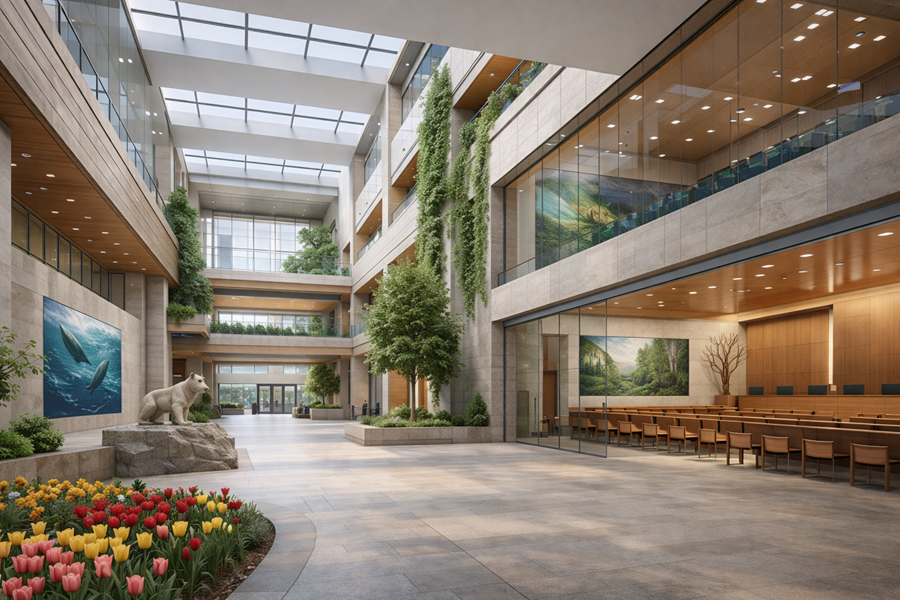
Beautiful structure and an enormous garden of tulips
I’ll never forget the day the bus drove up to the ECT campus. The main building is solid, but welcoming. I felt a sense of confidence in its green and blue glass and steel exterior. When we arrived, a garden nearly a hectare in size exploded with tulip blossoms. (This is The Netherlands, after all.) In my new forest green BES uniform with its golden tulip logo, I never felt more at home.
The tour guide introduced us to the ECT in an enormous atrium faced with Italian marble. The day before, while we traveled in one of the first models of all-electric airliners able to fly across the Atlantic, I studied the ECT’s background. The Environmental Crimes Tribunal was created in the Port Vila Treaty, the document signed by all the world’s national governments. The methane “spike” (so-called because that’s what it looked like on a graph) had nearly wrecked the Earth’s climate, and everyone was determined never to let a human-caused disaster harm the planet again.
Comparison chart of international courts
| Body | Authorizing Statue | Headquarters | Parent Body | Jurisdiction |
|---|---|---|---|---|
| Environmental Crimes Tribunal | Treaty of Port Vila and Annexes | The Hague, Netherlands | Independent | Environment, nature |
| International Criminal Court | Rome Statute | The Hague, Netherlands | Independent | War crimes, crimes against humanity |
| European Court of Human Rights | European Convention on Human Rights | Strasbourg, Austria | Independent | Human rights in Europe |
| International Court of Justice | United Nations Treaty | The Hague, Netherlands | United Nations | Disputes between states |
| US Supreme Court | US Constitution | Washington, DC | Independent | Domestic US cases, treaties |
| US state courts | Individual US states | State capitols | Independent | Cases within state borders |
Curbing a black market with the Carbon Laws
The Treaty created the BES as well, charging it with enforcing the new environmental laws enumerated in the Treaty, especially the ban on all fossil fuels. Some people refer to these provisions as the Carbon Laws, and every government has since enacted domestic versions of these laws. Historically, once something is banned, a black market develops, and the BES spends much of its energy combating illegal petroleum and natural gas trafficking. But with the Earth’s survival at stake, no one objects to the BES’s mission and objectives.
The ECT tour guide, a young student at a local university, walked us through the courtroom complex. Every hall and room had beautiful paintings and sculptures celebrating the natural beauty of our planet. In one courtroom, we listened for a few minutes to arguments in a case of “ecocide,” a new crime created by the Port Vila Treaty. As five judges in black robes listened, an ECT prosecutor interrogated a witness who said the accused transnational corporation had destroyed a forest in the Amazon, causing several species to go extinct. Unlike previous international courts, such as the International Criminal Court, the Environmental Crimes Tribunal hears cases against nations, governments, and globe-spanning corporations for crimes against nature and global systems that keep life going, such as the seas and the atmosphere.
The famous early case of an eco-terrorist group
After a lunch of delicious local fruit preserves, tiger bread, and meats from animals genetically modified to produce less methane, we heard a presentation on one of the most famous cases investigated by the BES. I’d already learned about it in high school, but it was still exciting to hear from Nick Sorrows, the lead investigator into The Mother Earth Insurgency, the eco-terrorist group with its twisted aim of attacking clean energy it believed was controlled by mega-corporations. The case made the BES once of the most respected international law enforcement agencies in the world.
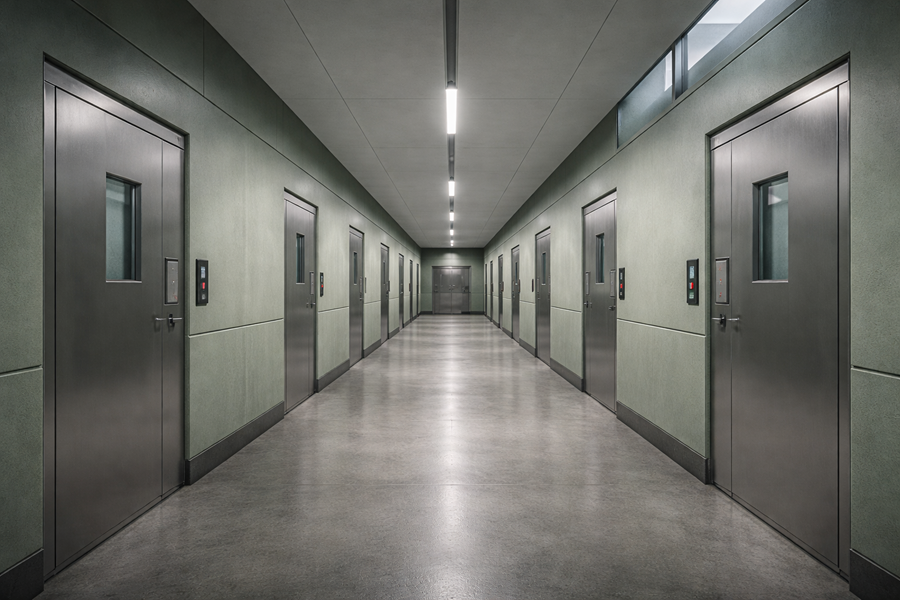
The prison holding environmental criminals
After the lecture, we visited a portion of the ECT that sent chills up my spine. Because of the unique nature of the ECT’s jurisdiction and activities, it has its own detention center in a remote area of the campus’s 100-hectare site. Billed as one of the most humane prisons on earth, the stark metal doors and green-painted walls felt cold as winter in the far north. Some people criticize the prison as too luxurious, but I wouldn’t want to spend even a single night inside. It houses some of the world’s most notorious environmental criminals, from former presidents to executives of the old, disbanded oil companies. I was glad to leave that part of the tour behind.
An exciting career ahead of me
The visit to the ECT was just the beginning of my BES training. That night in the hotel, enjoying a cocktail with my new BES colleagues, I never felt more excited about a career protecting the planet’s natural systems and endangered plants and animals from the exploitation of greedy humans. Perhaps I’m naive, but I felt then and feel now that the human race has turned a corner against its past destructive behavior. I can’t wait to tell you more about the work we do and how you can contribute.
Take the Recruit Field Qualification Exam to see if you have what it takes to work for BES.
Discover more from Bureau of Environmental Security
Subscribe to get the latest posts sent to your email.